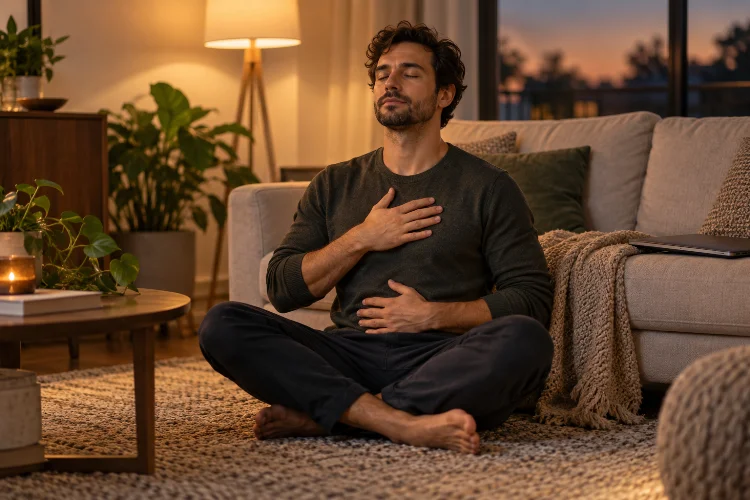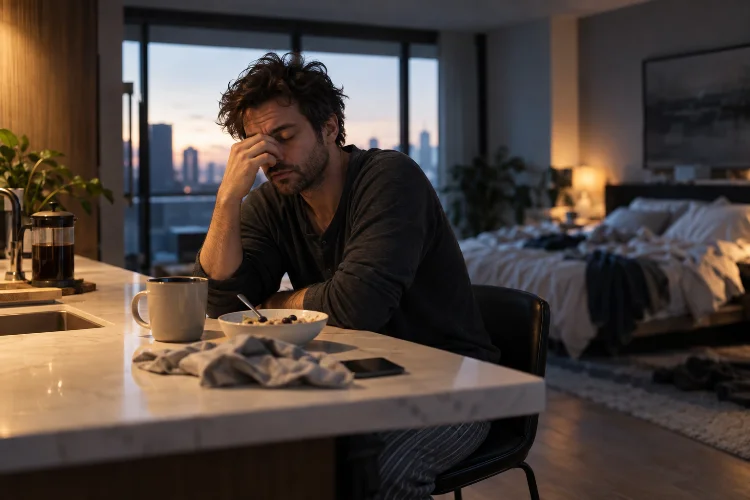
Stress can change your breathing before you consciously realize that you are stressed.
A difficult phone call, presentation, argument, traffic jam, or unexpected deadline can quickly make breathing faster and shallower. Heart rate may rise, muscles tighten, and attention narrows as the body prepares to respond to whatever it perceives as a challenge.
That connection also works in the opposite direction. Because breathing can be consciously controlled, changing its pace and pattern may influence parts of the body’s acute stress response.
This is why breathing techniques and their effects on acute stress responses have become an interesting area of psychological and physiological research.
Slow breathing, diaphragmatic breathing, prolonged exhalation, box breathing, and structured sighing are all used in different settings.
They are not magic switches that remove difficult circumstances. However, evidence suggests that controlled breathing can influence perceived stress, respiratory rate, heart-rate variability, and physiological arousal.
The key is understanding which techniques are useful, why they may work, and how to practice them without turning breathing into another stressful task.
What Happens to Breathing During Acute Stress?
Acute stress prepares the body for immediate action.
The sympathetic nervous system contributes to the familiar fight-or-flight response. Heart rate and breathing may accelerate, blood pressure can rise, and attention becomes more focused on the perceived threat.
NCCIH explains that stressful situations can increase heart rate, respiratory rate, blood pressure, muscle tension, and other physiological responses. Relaxation practices aim to encourage a contrasting state characterized by slower breathing and reduced physiological arousal.
Faster breathing is not automatically harmful. If you are sprinting away from danger, your body obviously needs more oxygen exchange.
The problem is that modern stress frequently activates similar responses while you remain seated at a desk, behind a steering wheel, or staring at a screen.
Controlled breathing provides one accessible way to interrupt that pattern.
Why Slow Breathing Can Change the Stress Response
Breathing is closely connected with cardiovascular regulation.
Heart rate naturally changes slightly across the breathing cycle. It generally accelerates during inhalation and slows during exhalation, a pattern known as respiratory sinus arrhythmia.
A meta-analysis of voluntary slow breathing found that slowing respiration increased several measures of vagally mediated heart-rate variability, including during the breathing exercise and afterward.
A separate systematic review found that slow breathing below approximately 10 breaths per minute was associated with changes in autonomic and central nervous system activity, including increased heart-rate variability and reduced measures of psychological arousal.
That does not mean higher HRV automatically equals perfect relaxation.
HRV is influenced by age, fitness, posture, illness, medication, sleep, and many other factors. It is better viewed as one window into autonomic regulaton rather than a simple stress score.
Diaphragmatic Breathing Encourages a Slower Rhythm
Diaphragmatic breathing is sometimes called belly breathing.
Instead of allowing most movement to occur high in the chest, you gently allow the abdomen to expand as you inhale and return inward as you exhale.
A systematic review examining diaphragmatic breathing found preliminary evidence that it may reduce both physiological and psychological measures of stress in adults, although the studies varied considerably in quality and design.
NCCIH similarly notes evidence suggesting that slow, deep breathing may modestly affect blood pressure and cortisol while helping reduce perceived stress.
A simple starting pattern
Sit comfortably and place one hand around your abdomen. Inhale gently through your nose without trying to fill your lungs as aggressively as possible.
Then exhale slowly and let the next breath arrive naturally.
Five minutes is enough for a practicle starting session. The goal is comfortable slowing, not taking the largest breath you can physically manage.
Longer Exhalations May Help Reduce Arousal
Many breathing techniques place greater emphasis on the exhale.
One approach might involve inhaling for four seconds and exhaling for six seconds. Another uses repeated physiological sighs or cyclic sighing, where inhalation patterns are followed by a longer exhalation.
A randomized controlled trial published in Cell Reports Medicine compared several five-minute daily breathing practices with mindfulness meditation over one month.
Breathwork improved mood and reduced respiratory rate, with exhale-focused cyclic sighing producing particularly strong results in that study.
More recent laboratory research has also examined prolonged exhalation during acute psychological stress.
A 2026 randomized trial found that both prolonged-exhalation breathing and box breathing reduced some markers of physiological stress reactivity before a simulated social stress test, although not every biomarker responded.
That last point is important.
A technique can make you feel calmer without lowering cortisol, HRV, heart rate, and every other stress measure simultaneously.
Stress biology is more complicated than one number.
Box Breathing Is Simple, but Evidence Is Still Developing
Box breathing uses four equal phases: inhale, hold, exhale, hold.
A common pattern is four seconds for each phase:
inhale for four, hold for four, exhale for four, hold for four.
Its symmetry makes it easy to remember, which may explain part of its popularity among athletes, military personnel, and people working in high-pressure environments.
A 2026 systematic review identified eight randomized controlled trials specifically investigating box breathing.
Some studies reported short-term improvements in stress, anxiety, mood, respiratory rate, or other physiological measures, but results were inconsistent and protocols varied considerably.
So box breathing is reasonable to experiment with, but it should not be presented as scientifically superior to every other method.
Breath holding can also feel uncomfortable for some people. If that happens, a continuous slow-breathing pattern without pauses may be easier.
Cyclic Sighing Can Work in Very Short Sessions
You may already sigh automatically after a stressful moment.
Structured sighing turns that natural behavior into a deliberate exercise.
In cyclic sighing, a person typically takes one inhalation followed by a second smaller inhalation, then performs a long, slow exhale. The pattern is repeated gently for a short period.
The 2023 randomized trial comparing breathwork with mindfulness found that five minutes of daily cyclic sighing improved positive mood and lowered respiratory rate over a month.
A 2026 real-world pilot study also compared one-minute cyclic sighing with box breathing when people experienced anxiety in everyday situations, illustrating growing interest in very brief “just-in-time” breathing interventions.
Short duration is valuable because stress management techniques are more useful when people can actually use them during normal life.
You may not have 30 minutes before an important meeting. You probably have one or two.
Avoid Turning Deep Breathing Into Overbreathing
More air is not always better.
One of the most common mistakes is interpreting “deep breathing” as repeated, forceful inhalation. Breathing too quickly or too deeply can lower carbon dioxide levels and make you feel light-headed, tingly, or uncomfortable.
WHO guidance specifically advises slowing the breath gently and notes that dizziness or light-headedness can indicate breathing that is too deep, hard, or fast.
If you feel dizzy, return to normal breathing.
Your shoulders should generally remain relaxed, and the exercise should feel easier rather than increasingly demanding.
People with respiratory or cardiovascular conditions, or anyone who becomes unusually breathless during breathing exercises, should seek appropriate medical advice instead of forcing a technique.
Breathing exercises should support normal breathing, not become an endurance test.
Use Breathing Before Stress Peaks
Most people remember breathing techniques only when they are already overwhelmed.
Practicing during lower-stress periods can make the technique more familiar when pressure rises.
Try two to five minutes before a meeting, immediately after finishing difficult work, during a commute when safely stationary, or as part of an evening transition routine.
You can also use breathing between stressful events.
Imagine finishing a tense phone call and immediately opening the next email. Your body never receives much opportunity to shift state.
Taking two minutes for slow, consistant breathing creates a small recovery window before the next demand arrives.
WHO includes slow breathing and relaxation techniques among strategies people can learn for anxiety and stress management.
Regular practice usually makes more sense than waiting for an emergency.
Do Not Expect Breathing to Solve the Source of Stress
Breathing changes your response to stress. It does not necessarily change the stressor.
Five minutes of slow breathing cannot remove an unreasonable workload, fix financial problems, resolve an unhealthy relationship, or replace treatment for an anxiety disorder.
That distinction matters.
Breathing is most useful as one layer of stress management alongside adequate sleep, physical activity, supportive relationships, realistic workloads, psychological skills, and appropriate professional care.
A meta-analysis of randomized controlled trials found a small-to-medium overall reduction in self-reported stress from breathwork compared with control conditions. However, researchers also highlighted limitations in the evidence and the need for larger, better-designed trials.
So use breathwork as a tool—not as an explanation for every symptom or a substitute for healthcare.
Which Breathing Technique Should You Choose?
There is no universally superior pattern.
If counting makes you tense, simple diaphragmatic breathing may be better. If you like structure, box breathing can provide a clear rhythm.
If your main goal is rapidly reducing arousal, slow breathing with a slightly longer exhale may feel particularly comfortable. Cyclic sighing is another option when you want a very short intervention.
Individual responses matter.
Recent research in physicians found considerable variation in how much people benefited from brief breathing exercises, reinforcing the idea that one technique will not work equally well for everyone.
Try a method for several sessions and notice your actual response rather than assuming the most complicated technique must be the most effective.
The best method is usually one that is safe, comfortable, and easy enough to use when life becomes stressfull.
Breathing techniques provide a simple way to influence some elements of the acute stress response because respiration connects conscious behavior with autonomic physiology.
Research supports potential benefits from slow breathing, diaphragmatic breathing, prolonged exhalation, cyclic sighing, and structured practices such as box breathing.
Effects can include lower perceived stress, slower respiratory rate, changes in heart-rate variability, and reduced physiological arousal, although results vary between people and studies.
Start with something simple: spend two to five minutes breathing gently and more slowly than usual, without forcing large breaths. Try it before or after a predictable stressful event and observe how you respond.
Breathing will not remove every stressor, but practiced consistently, it can become a useful tool for creating a calmer transition between pressure and recovery.